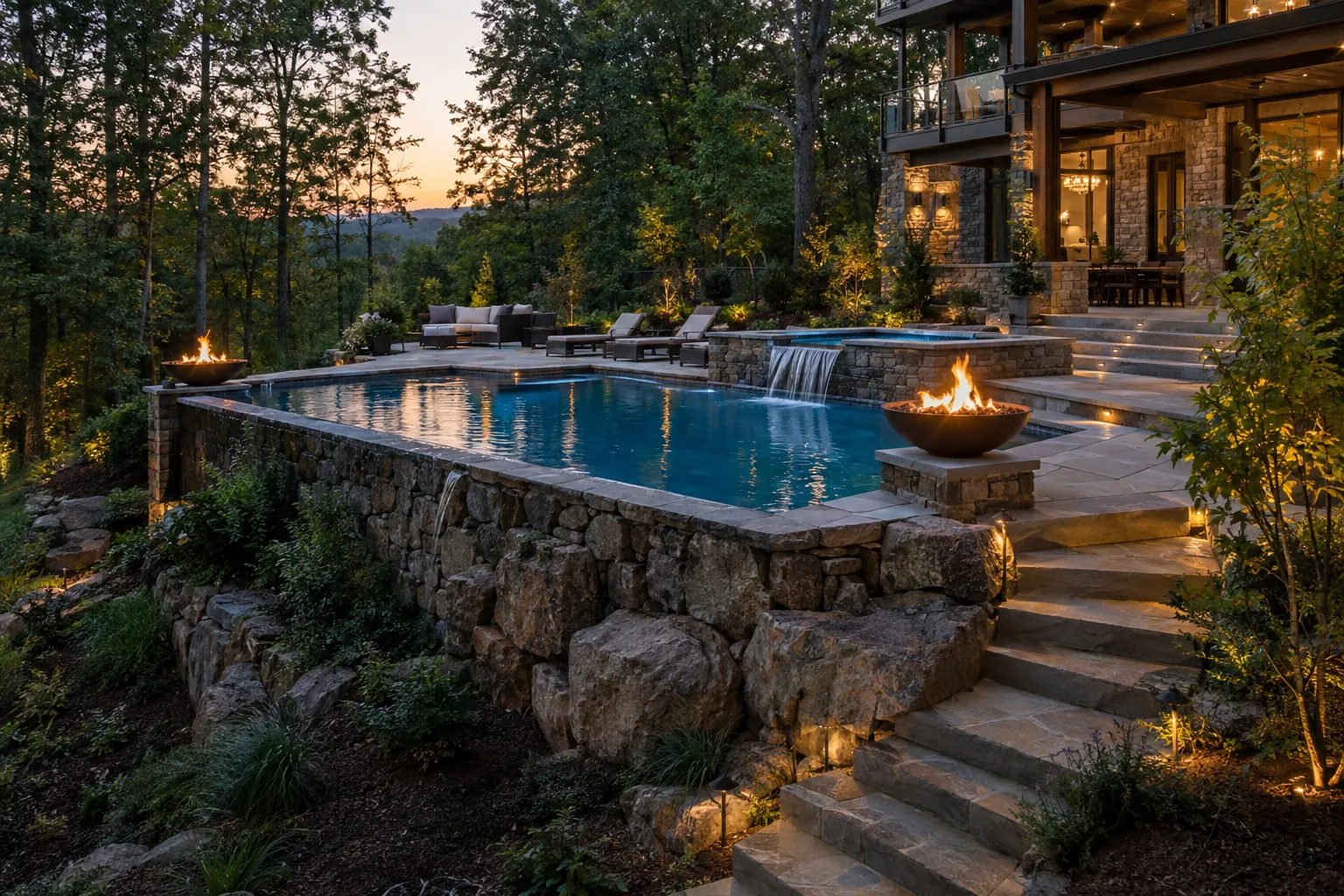
A sloped backyard can offer an interesting setting for a pool, but the slope must be part of the design from the beginning. Flattening the visible pool area does not answer every question about support, runoff, or access. The work should be assessed across the whole property.
Measure the relationship between elevations
The useful question is not simply whether the yard is steep. It is how the proposed water level, house, deck, boundaries, and surrounding grades relate. Ask the designer to show those relationships so you can understand where steps, walls, or changes to the layout may be needed.
Separate the pool structure from retaining
A pool shell and a wall holding back soil have different responsibilities. The design must explain how they interact and what supporting work is required. Wall height, nearby loads, soil, and water conditions are matters for site-specific evaluation, not a rule copied from another project.
Trace runoff before and after the build
Review where water arrives, how the new surfaces change its path, and where it can appropriately leave. A drainage plan needs a workable destination. Photographs after a storm can help explain conditions that are not visible on a dry site visit.
Plan construction access and sequence
Equipment access, excavation, material storage, retaining construction, and restoration can materially affect the scope. Discuss how crews will reach the work without blocking later stages. A narrow side yard or a lower build area deserves an explicit construction plan.
Compare the full slope solution
United Poolscapes brings geotechnical engineering experience to pool, retaining, and drainage planning. Ask to review relevant project footage and identify which work is included in your proposal. A feasible design and documented site scope matter more than a claim that every sloped yard can be built the same way.
Talk to Christian about your yard
Send United Poolscapes the address and what you want to build or change. Include photos and anything you know about the access, slope or drainage.