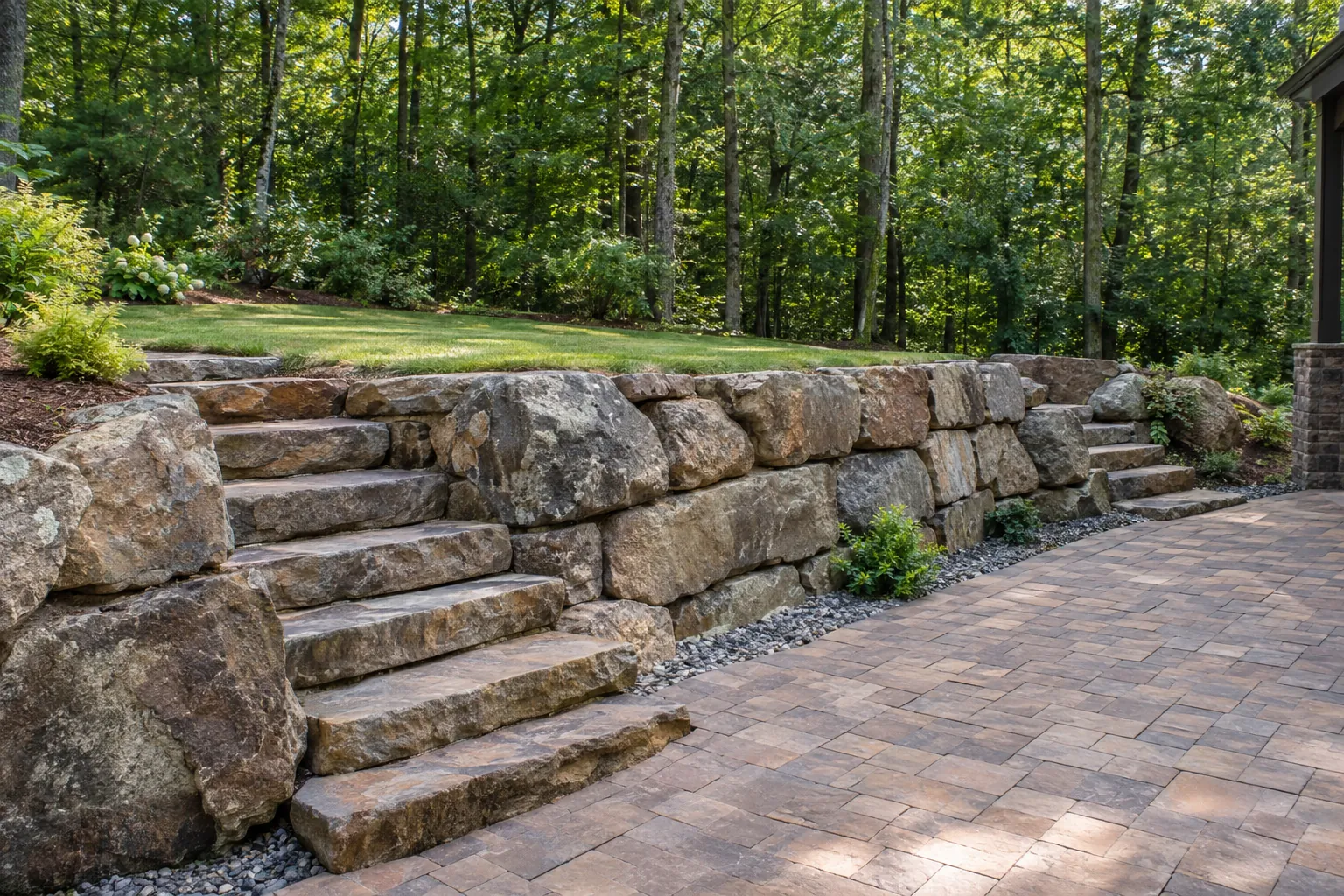
A retaining wall holds back soil so different ground levels can exist beside one another. In a backyard project, that can make room for a pool, patio, access route, or planting area. Its value depends on the complete site design, not just the finished face of the wall.
Create usable changes in level
A wall may help organize a sloped property into spaces with different functions. Review the elevations and the amount of usable area created. Include stairs and circulation so the new terrace is practical to reach, not just attractive from the house.
Coordinate support and drainage
Water and soil conditions affect retaining work. Ask the designer to explain the wall system, the loads it supports, and the proposed drainage. A wall is not a substitute for understanding where runoff comes from or where it can go.
Plan alongside the pool and structures
A nearby pool, deck, driveway, or pavilion can affect the design. Discuss their locations before the retaining scope is finalized. United Poolscapes considers retaining with pool and hardscape work so the separate elements are planned together.
Compare complete construction scopes
Review excavation, foundation preparation, drainage, backfill, access, finishes, and restoration. Ask which design or approvals are needed for the specific project. Forsyth County provides residential retaining-wall permit information; requirements should be confirmed for the parcel rather than inferred from a neighbor’s wall.
Useful official resources
Talk to Christian about your yard
Send United Poolscapes the address and what you want to build or change. Include photos and anything you know about the access, slope or drainage.