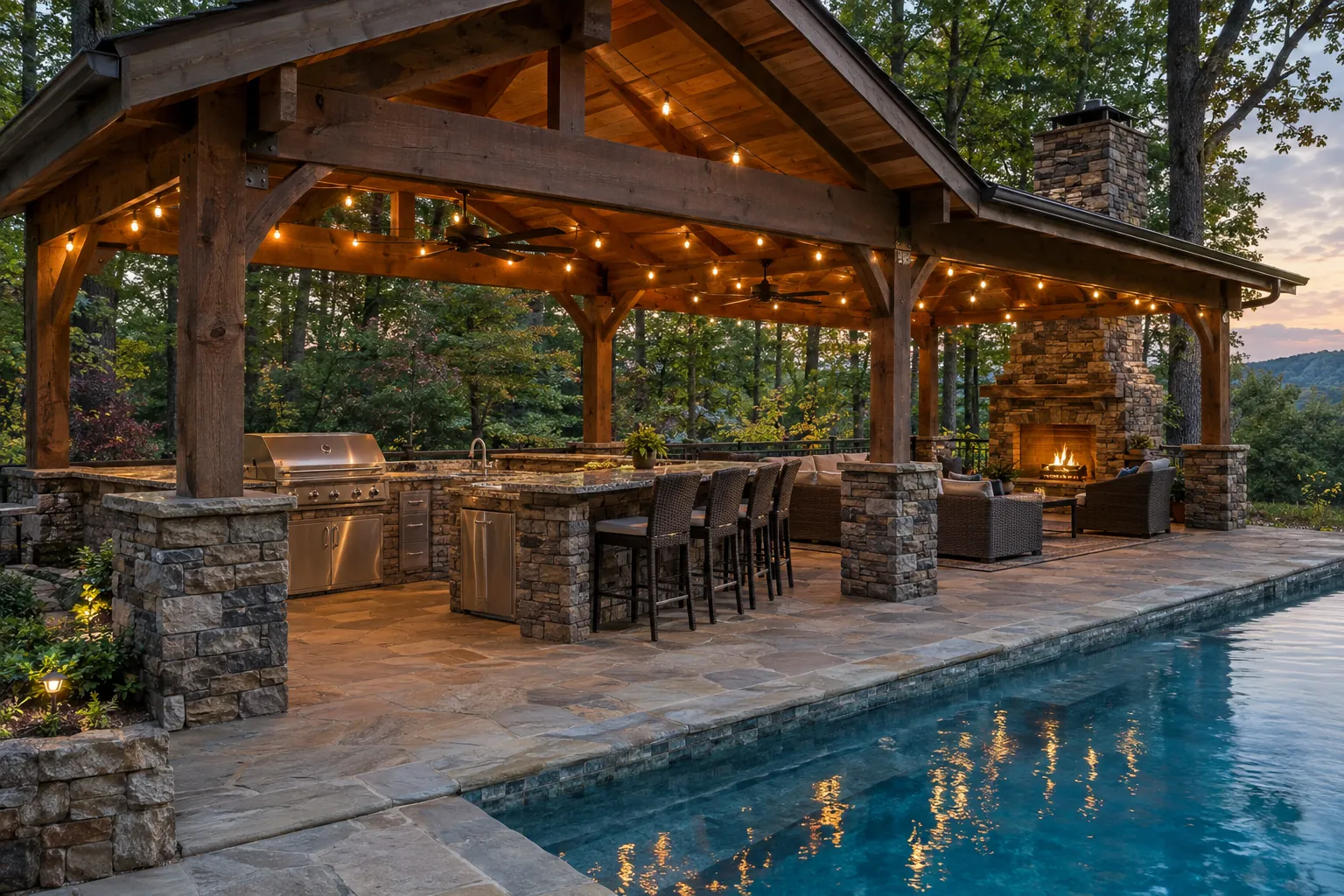
An outdoor kitchen makes sense when it improves something you already like doing outside. Begin with your cooking habits and the trips you make back to the house. A larger appliance list is not automatically a more useful kitchen.
1. Keep the cook part of the gathering
Place preparation and cooking where conversation is easy without putting guests in the working area. Sketch seating and circulation at the same time as the grill. Leave the intended operating clearances to the appliance and installation requirements.
2. Reduce trips indoors
Identify what you carry outside repeatedly: utensils, ingredients, serving dishes, or drinks. Those needs can guide worktop and storage choices. Decide which functions are worth duplicating and which can stay in the indoor kitchen.
3. Make a patio work harder
A kitchen can give a poorly used patio a clear purpose. Check whether the existing surface, drainage, and utilities suit the plan. The project may need more than placing a cabinet on the current paving.
4. Coordinate a wider backyard project
Pool, pavilion, dining, and kitchen construction can share planning decisions about access and utility routes. Confirm the full scope before finishes are installed, especially when outdoor features will be built in separate phases.
5. Design for the way you entertain
A simple cooking area may suit your household better than a large installation. Weigh cleaning, weather exposure, service access, and ownership cost against expected use. Ask for a practical layout and itemized selections before choosing the visual finish.
Talk to Christian about your yard
Send United Poolscapes the address and what you want to build or change. Include photos and anything you know about the access, slope or drainage.