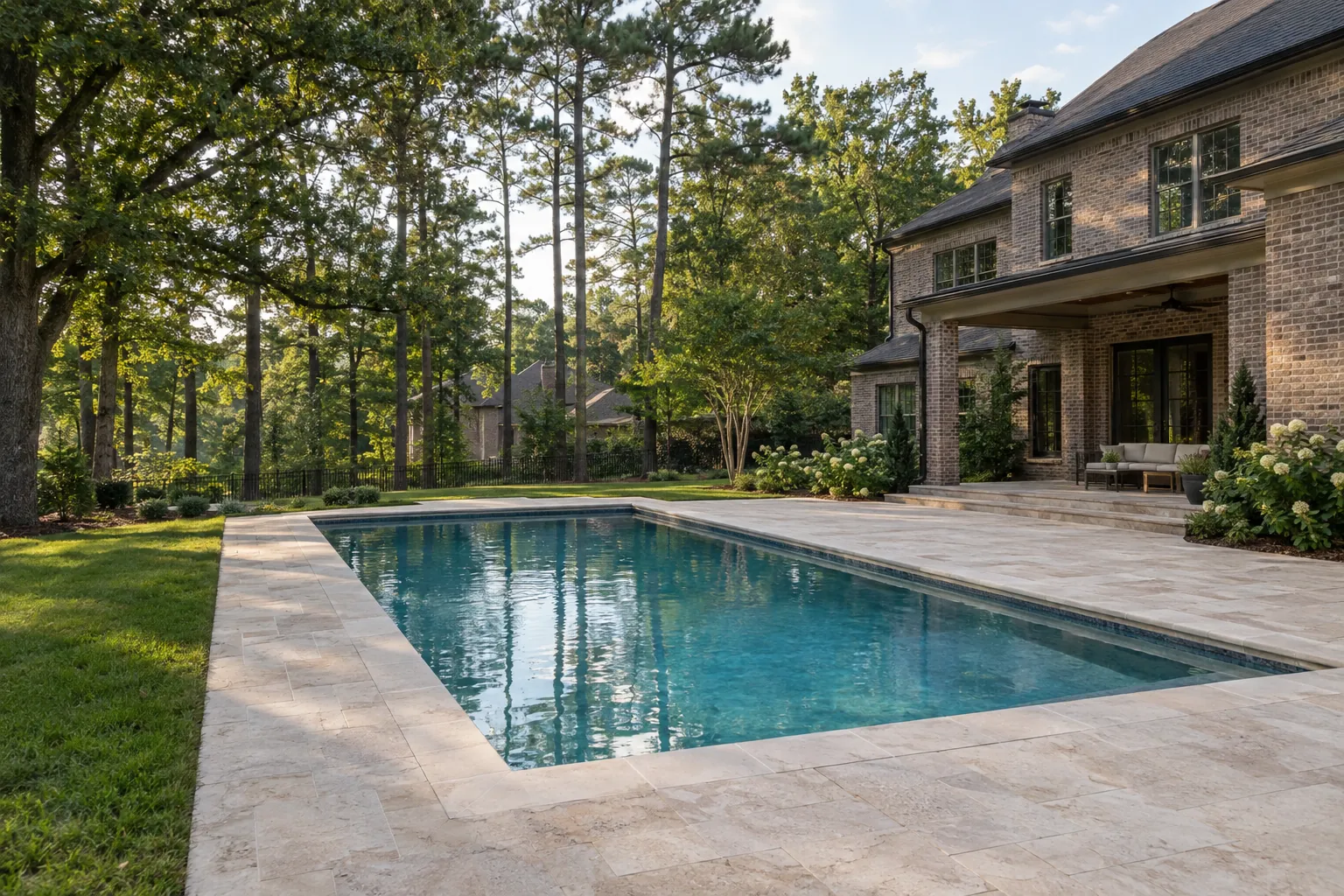
The main advantage of an inground pool is the opportunity to integrate the water with the rest of the property. That opportunity comes with important site decisions. Installation should be evaluated as a construction project, with a clear scope for the parts above and below the finished deck.
Connection to the house and deck
A coordinated layout can make the pool edge, patio, steps, and seating work together. Review finished elevations and walking routes early. Ask how the design manages runoff without sending water into the pool or toward the home.
Choices that fit the property
Pool systems differ in their design options and installation needs. Compare the available approach with the yard’s access, intended shape, finish preferences, and maintenance requirements. Confirm the system a contractor actually offers instead of assuming every pool type is available.
A complete visual plan
Materials can connect the pool with walls, paths, and outdoor structures. Samples are useful, but also consider shade, wet surfaces, furniture layout, and the way materials meet. A beautiful individual finish can still be awkward in the wrong location.
A clear ownership handoff
Ask what startup, equipment instruction, and finish-care information are included. Keep the approved drawings, selections, and product records. United Poolscapes can discuss an inground pool alongside the hardscape, retaining, and drainage needed for the property.
Talk to Christian about your yard
Send United Poolscapes the address and what you want to build or change. Include photos and anything you know about the access, slope or drainage.